Yoga for stress relief

Stress doesn’t just live in your mind — it shows up in your shoulders, jaw, sleep, digestion, and the way you move through your day.

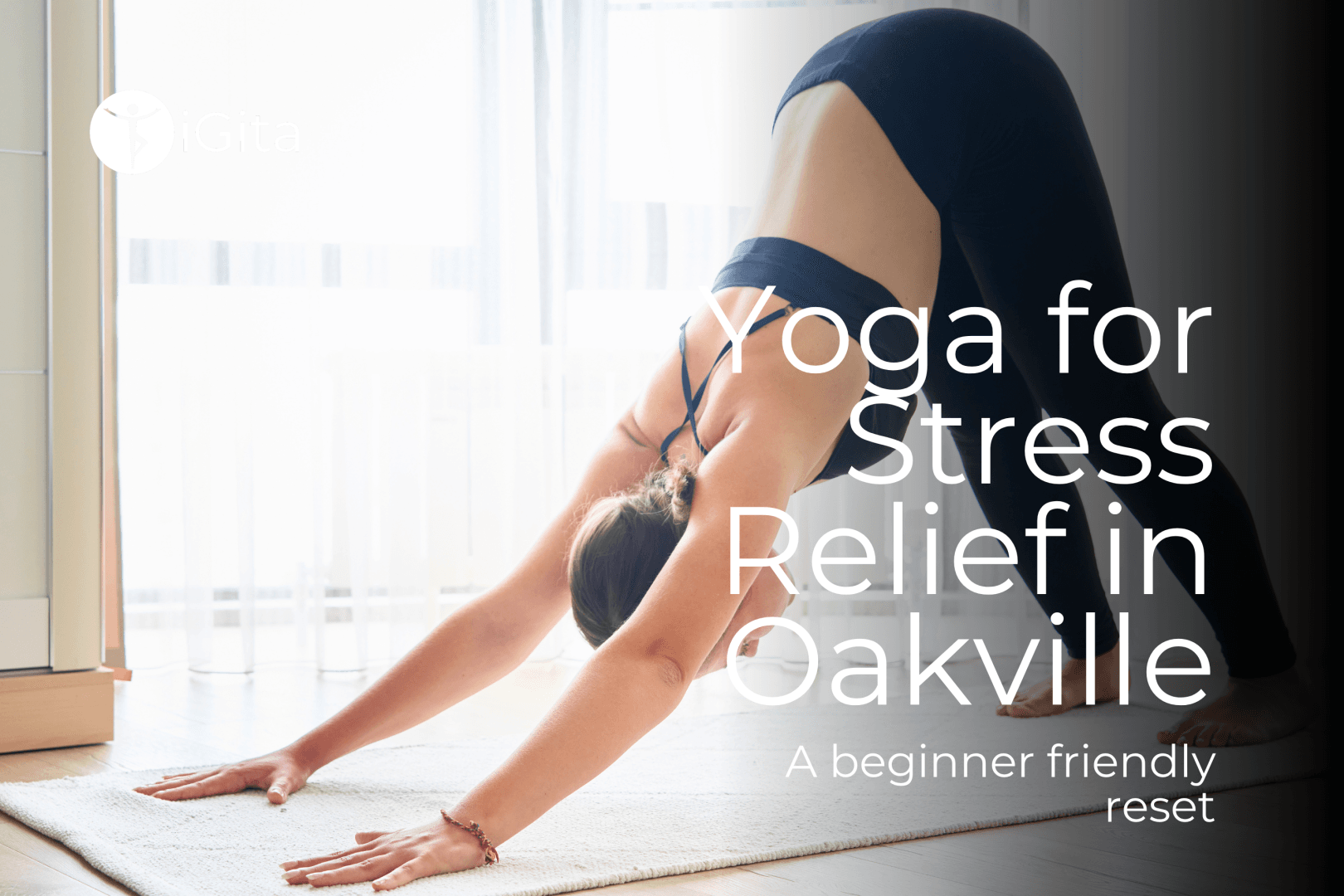
If you’re looking for yoga for stress relief in Oakville, the goal isn’t to “do the most” — it’s to choose a practice that helps you downshift and come back to your body.

When stress is high, the best routine is one that helps you return to your body.

Yoga can support:

  • breath
  • mobility
  • nervous system regulation

In this guide, you’ll find:

  • What “stress-relief yoga” actually looks like
  • What to expect in a calming class (especially if you’re new)
  • A simple weekly reset plan that’s realistic
  • A few at-home tools you can use in 5–10 minutes

Why yoga helps when you’re stressed

When stress is ongoing, the nervous system can get stuck in fight/flight (wired, restless, irritable) or shut-down (flat, foggy, low motivation). Yoga doesn’t erase stressors — but it can help you:


  • shift out of survival mode through breath + rhythm
  • release physical tension (neck/shoulders/hips/jaw)
  • improve sleep quality by signaling “it’s safe to rest”
  • feel steady again — even if nothing in life is “perfect” yet


Think of it like a reset button you can press more often.

Stress-relief yoga is usually:

  • slower, more grounded pacing
  • longer holds (or gentle flowing with lots of breath)
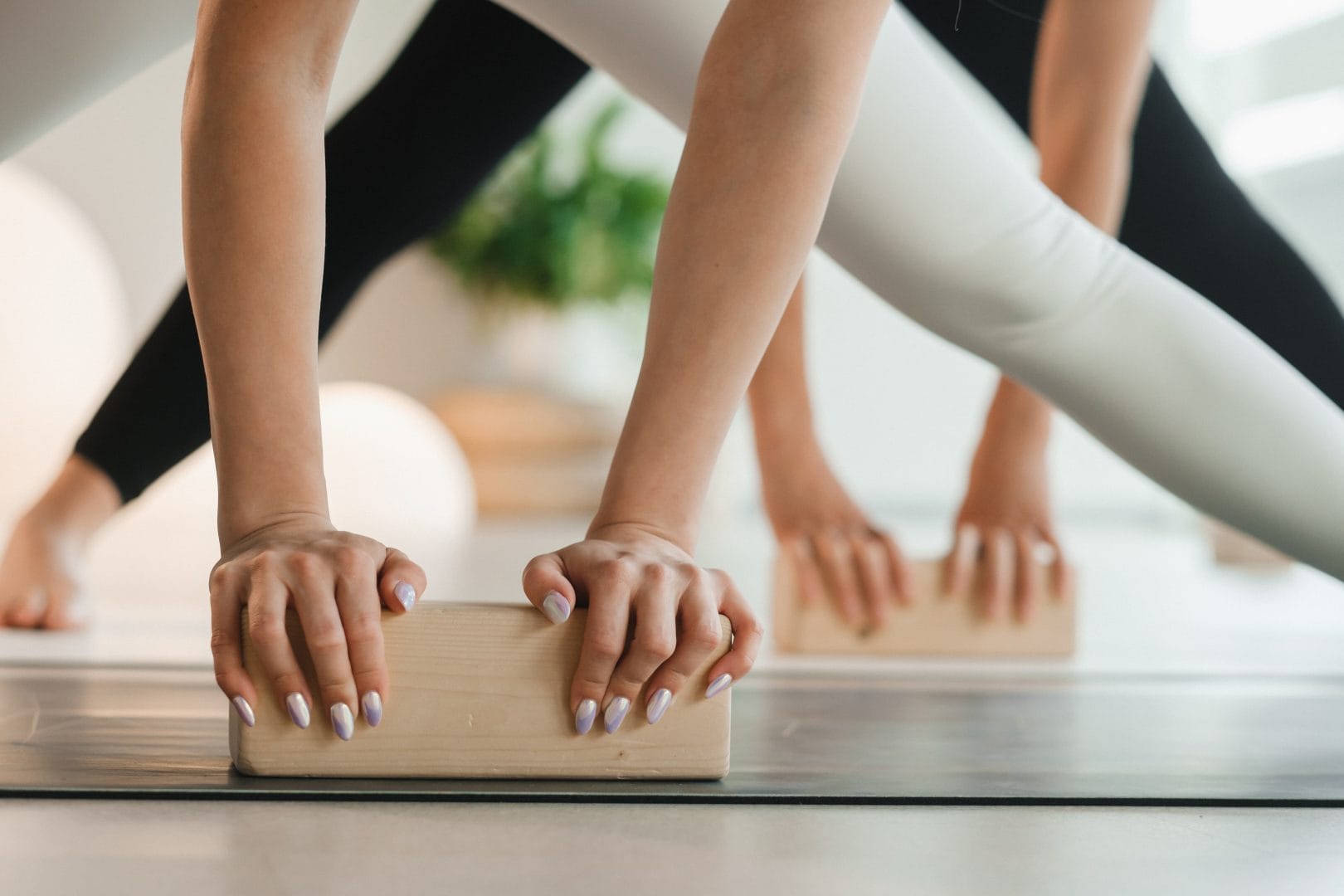
  • supported shapes (props welcome)
  • less “performance,” more sensation + choice
  • a longer final rest (savasana) or guided relaxation

It’s not:

  • pushing for deep stretches when your body is bracing
  • doing the hardest class to “sweat it out” (that can help sometimes, but not always when you’re already overloaded)
  • forcing stillness if stillness feels activating — you can build toward it

Your job is not to “keep up.” Your job is to notice: Am I holding my breath? Am I clenching? Can I soften 5%?

That’s the practice.

Quick at-home reset

5 minutes, no yoga experience needed – try this today.

Downshift breath
2 minutes

  • Inhale through the nose for a comfortable count.
  • Exhale a little longer than your inhale.
  • If it helps, silently think “in… out…” and keep it easy.

Mobility Reset
2 minutes

  • Shoulder rolls (slow, 5 each direction)
  • Cat–cow (5–8 rounds)
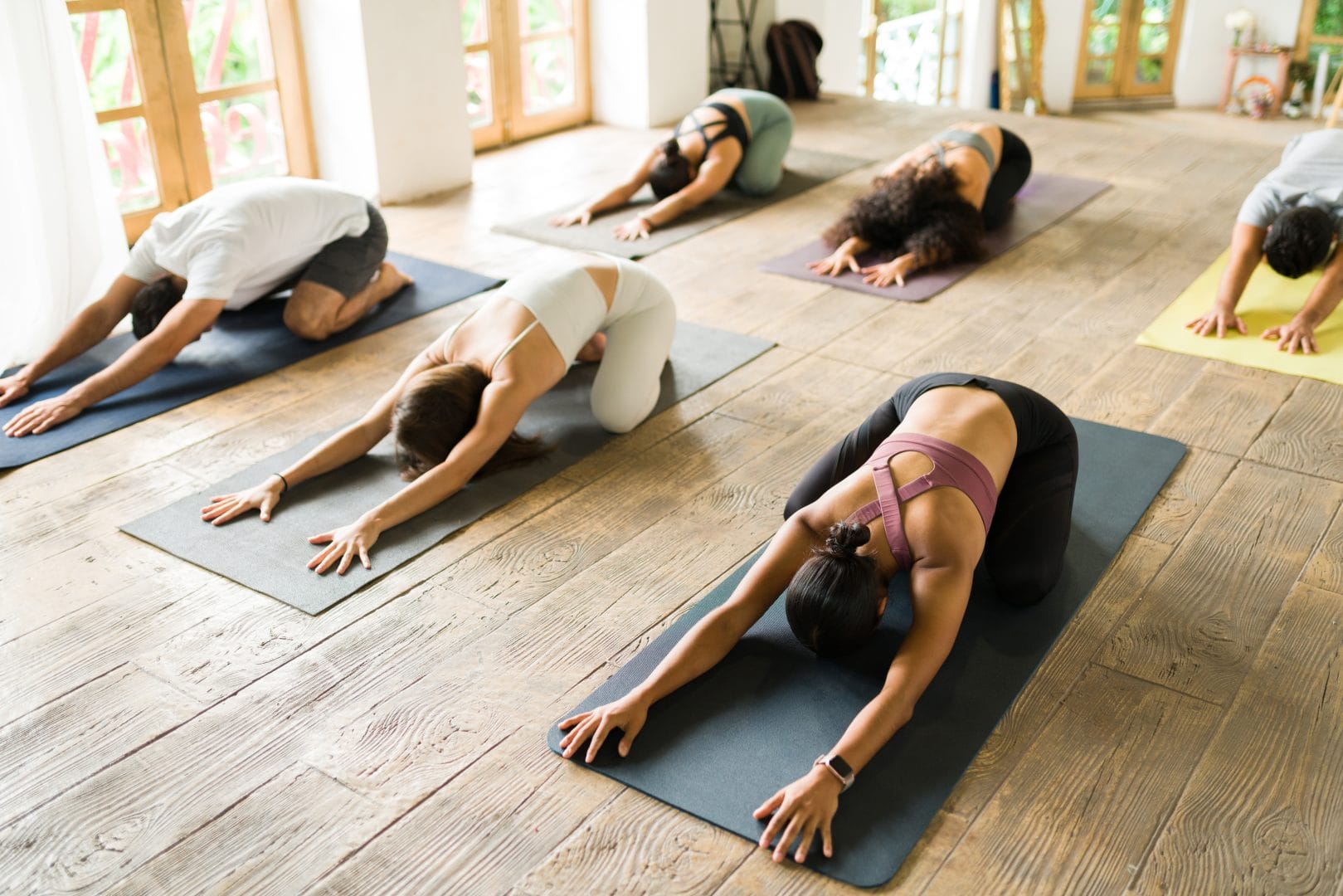
  • Child’s pose or thread-the-needle (30–45 seconds each side)

One Minute of Stillness
1 minute

Lie down or sit comfortably. Let your eyes soften. Notice the support under you.

If you only do one thing, do the exhale.

If you’re anxious about going to class, you’re not alone

A lot of people feel nervous walking into a studio — especially when stress is already high.

Here’s what helps:

  • arrive 10–15 minutes early
  • tell the front desk it’s your first time
  • choose a spot near the door if that feels supportive
  • take breaks whenever you need
  • skip poses that don’t feel right — you’re allowed

You don’t have to be “good at yoga” to benefit from it.

FAQ

Do I need to be flexible?

No. Flexibility isn’t a prerequisite — it’s something that can change over time. Stress-relief yoga is more about breath + settling than stretching deeper.

Arrive early, choose a spot near the door, and take breaks. If you feel activated, a hand on your belly and a slower exhale can help.

Comfortable clothes you can move in, and a water bottle. If you have a yoga mat, bring it — and if not, most studios have mats available.

If you can do 1 class per week, you’ll likely feel a difference. If you can do 2 classes per week, that’s when many people notice the steadiness building faster.

That’s a great reason to choose a gentle class. You can commit to showing up and give yourself full permission to modify, rest, or take child’s pose.

Ready to reset?

Start with one class. Then book the next one while the momentum is fresh.

You May Also Like...

Yoga for stress relief

Stress doesn’t just live in your mind — it shows up in your shoulders, jaw, sleep, digestion, and the way you move through your day.
Read More →