
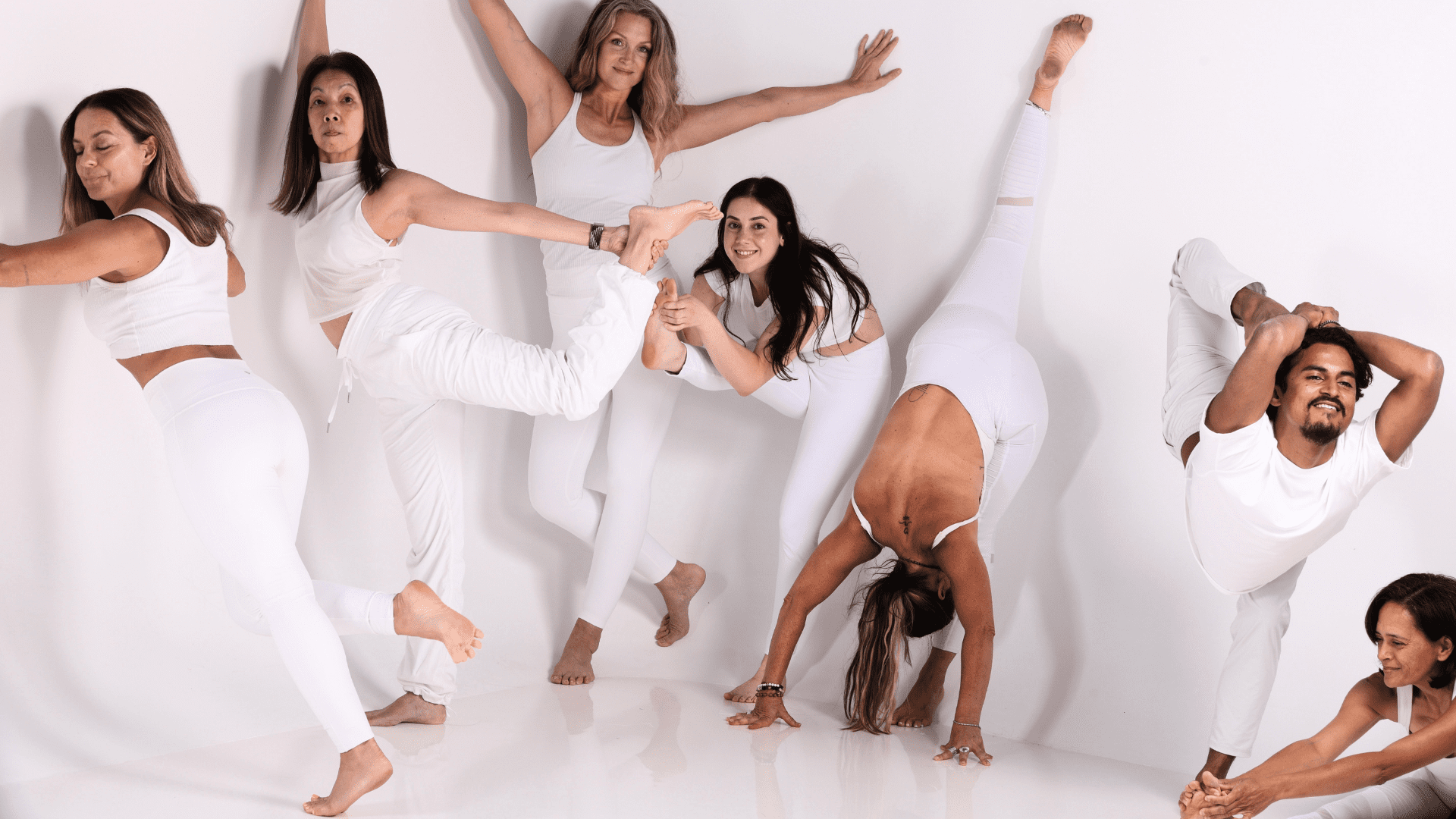
iGita’s 200 Hour Yoga Teacher Training Program welcomes people of all ages, abilities, and fitness levels.
Whether you aim to teach or deepen your personal practice, you’ll find iGita’s program both inspirational and transformative. It provides the solid foundation needed to practice and teach safely, skillfully, and with integrity.

01 | Guaranteed Success: Our modular program accommodates different learning paces and personal commitments.
02 | Flexible Learning: Complete modules consecutively or individually over time. Repeat modules at no extra cost with ongoing mentorship.
03 | Multiple Yoga Styles: Learn Vinyasa, Hatha, Hot, Yin, and Ashtanga in one program.
04 | Unlimited Classes: Enjoy unlimited yoga classes at iGita for a full year from start date. Early birds begin upon deposit.
05 | Yoga Alliance Registered (RYS 200): Meet prestigious standards with pathway to RYS 500 accreditation through our advanced training.
06 | Experienced Faculty: Train with Maureen, who brings 35+ years of yoga experience and has led teacher trainings since 2007.
07 | Practical Teaching: We ensure you’re truly ready to teach through hands-on experience and ongoing support, with opportunities to review material as needed.
We welcome all applicants who are committed to a regular yoga practice, regardless of skill level.
If you’re interested in applying for the program, please click the link and complete the application to initiate the process.
Have questions about the program? You should. In addition to public information sessions, we also meet with applicants privately, by appointment, to discuss this important decision with you. Please email info@myiGita.com to request an appointment.
Early Bird Pricing (apply before July 31): $3,600
Regular Program Pricing: $3,800
Payment plans: available with a $500 deposit.
Please email info@myiGita.com to request an appointment to speak with us about payment plans.

7 modules make up the iGita 200-hour Teacher Training.
All modules and corresponding homework and exams must be completed to receive certification as a 200-hour RYT.
The course includes a one-year unlimited membership at iGita to ensure our students maintain practices throughout.
Yoga instructors must have a solid understanding of structural anatomy and kinesiology to ensure their students’ safety.
Study includes:
Our goal is to ensure every student teacher can accurately identify proper technique and muscular engagement. Understanding correct form is essential for teaching asana safely and effectively, and for helping prevent student injuries.
Study includes:
Students are required to:
In this module, students will be introduced to a few of the important classical yoga texts of India.
Yogic texts:
Students will be taught traditional methods of practice and will begin to understand why we practice and experience the benefits of asana from a classical perspective.
Topics of discussion include:
Students are introduced to Ayurveda, the Indian life science, and guided through the proper techniques of 8 different breathing exercises.
Students will also learn healthy lifestyle habits, including meditation, breathing, and cleansing techniques.
Meditation
Kriya
Pranayama
Homework: Students are strongly encouraged to practice these techniques daily and keep a journal. Journals are to be handed in upon completion of the program. This daily practice will help students develop breath awareness and, in turn, a deeper somatic awareness—an important quality in a good yoga teacher.
In this module, we discuss the subtle energy present in nature, in our environment, and within ourselves—and how it can affect our physical and emotional bodies.
Topics of discussion include:
Students will complete an in-depth study of several modern styles of yoga, including the sequences of Ashtanga, Hot Yoga, and the Sivananda series.
Using three tried-and-true methods of sequencing, students will also learn to confidently design their own classes in the styles of:
Everything you need to know about the business of yoga.
Topics include:
Early Bird Pricing (apply before July 31): $3,600
Regular Program Pricing: $3,800
Payment plans: available with a $500 deposit.
Please email info@myiGita.com to request an appointment to speak with us about payment plans.
I practiced yoga daily and read extensively, but teaching certainly wasn’t my goal. Over time, friends, family, and even mere acquaintances began asking me questions and requesting instruction. I obliged, but teaching didn’t come naturally to me—I struggled to articulate concepts clearly. Through persistence and a genuine desire to help others in their practice, I improved, and more and more people sought my guidance. It was a transformative journey.
Teaching has become my yoga practice. For me, it’s infinitely more rewarding than the physical practice itself. There’s something within all of us that yearns to inspire and serve others. Having personally experienced yoga’s transformative, healing, and rejuvenating powers—and witnessing these effects in countless others—this work has become my life’s purpose. Training teachers is my highest calling. It will be my honour and privilege to guide and support you on this journey.
Lead Trainer, 200hr & 300hr RYS Faculty
Founder, iGita Yoga Studio

Yes. This program is Yoga Alliance registered, and students receive a certificate upon completion (as long as all attendance and graduation requirements are met).
No. You don’t need to be “advanced” or extra flexible. You’ll be guided through foundations and safe progressions, with options offered for different bodies and experience levels. What matters most is consistency, willingness to learn, and openness to feedback.
This training is a fit for students who want to deepen their practice and/or learn to teach with structure, mentorship, and real practice-teaching reps—supported in an immersive container.
That’s welcome. Many students do trainings for personal growth, deeper study, and a stronger personal practice. If you choose to teach later, you’ll have the skills and support to take that next step.
This is a Yoga Alliance 200-hour teacher training. Your cohort’s full hour breakdown, schedule, and any at-home study expectations are provided in the info package/application details.
The training is held in-studio at iGita in Oakville, Ontario.
Teacher trainings have attendance requirements. We’ll outline what’s mandatory, what can be made up (if anything), and what’s required to graduate—before you commit.
Yes—practice teaching is a core part of how confidence is built. You’ll start small, teach in supportive groups, receive clear feedback, and repeat. Nervousness is normal; the structure is designed to help it settle through reps.
The training approach, lineage, and style emphasis (including sequencing structure and teaching methodology) will be described in the full curriculum so you can evaluate fit.
Core areas typically include asana/alignment, anatomy, pranayama, meditation, philosophy/ethics, sequencing, cueing, and teaching methodology—plus supervised teaching practice. Your cohort curriculum outlines the exact modules.
Yes. Anatomy is taught in a practical, yoga-relevant way. No prior anatomy knowledge is required.
We aim to teach in a respectful, accessible way with options and clear communication. If your cohort includes specific frameworks (trauma-informed, inclusive teaching, etc.), we’ll state that clearly.
Let us know in your application. Many conditions can be accommodated with modifications, pacing, and support, but we’ll advise if anything would limit participation. (This training is not a substitute for medical care.)
Please share this on your application so we can discuss fit, modifications, and any recommendations based on your timeline and experience.
Bring your mat if you have one you love. We’ll share what the studio provides (and what to bring) before the program begins.
Yoga mat, water bottle, notebook, and anything you like for comfort (layers, a small towel, etc.). We’ll provide a full “what to bring” list in the welcome email.
Yes—parking details and arrival guidance will be shared with accepted trainees.
You may want to budget for books/materials, snacks/meals during training days, and any optional workshops or mentorship after graduation.