
A lot of people start yoga for the stretch, the strength, or the stress relief — and then, at some point, they realize something: yoga is bigger than poses.
The 8 limbs of yoga are a simple map for living yoga, not just doing yoga. You can use them to deepen your practice, steady your mind, and feel more grounded in everyday life.
This guide breaks the limbs down in plain language — with practical examples you can actually use.
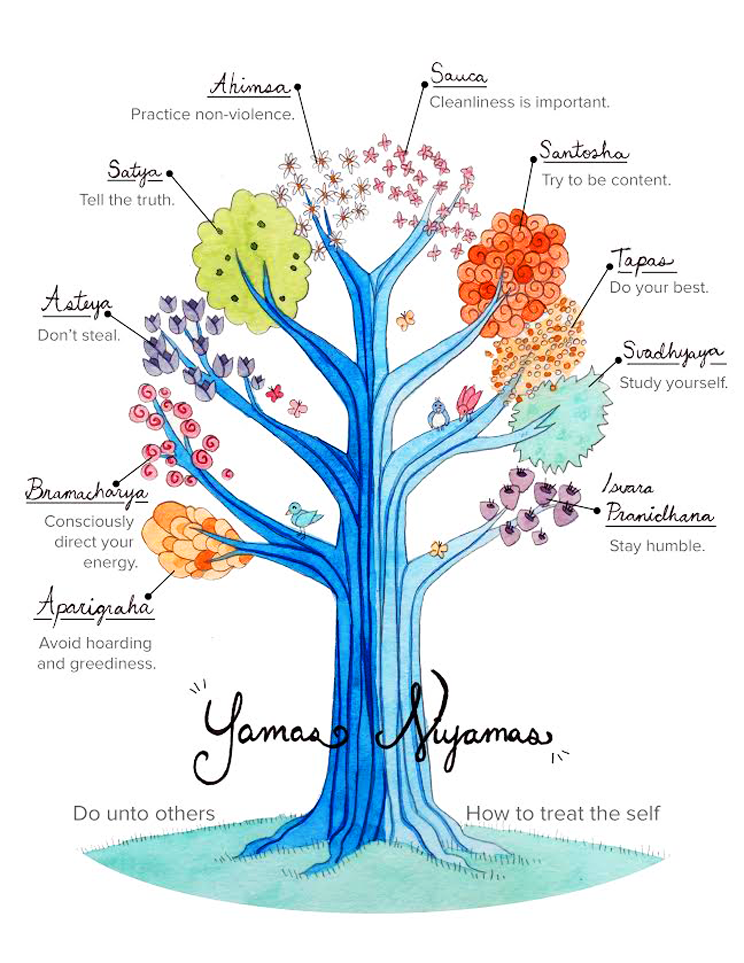
1) Yama: how you relate to others
The yamas are ethical “guidelines” — not rules you pass or fail.
Examples:
speaking honestly, but with care
noticing where you overextend or people-please
practicing non-harming (to others and yourself)
2) Niyama: how you relate to yourself
The niyamas are practices for inner steadiness.
Examples:
consistency without rigidity
self-study (patterns, triggers, habits)
creating small daily rituals that support you
3) Asana: posture (and the ability to be with discomfort)
Asana is about learning to be present in the body — with steadiness and ease.
In practice:
you build strength and mobility
you learn alignment and breath
you meet discomfort without forcing or collapsing
4) Pranayama: breath and nervous system regulation
Breath practices help you shift states:
downshift stress
improve focus
build resilience
5) Pratyahara: turning inward
This is the limb of “less noise.”
In practice:
reducing distraction
noticing what you’re taking in (scrolling, caffeine, over-scheduling)
choosing what actually supports you
6) Dharana: concentration
Training attention is part of yoga.
In practice:
returning to one focal point (breath, sensation, drishti)
building mental steadiness in small reps
7) Dhyana: meditation
Meditation is sustained attention — not “empty mind.”
In practice:
staying with one object longer
learning to notice thoughts without being pulled by them
8) Samadhi: integration
This is often described as absorption or unity — but for most modern practitioners, it’s helpful to think of it as:
moments where you feel clear, connected, and less fragmented
Try this approach:
Pick one limb per week (or even per month).
Choose one tiny action that expresses it.
Examples:
Yama: practice kinder self-talk after class
Niyama: 5 minutes of journaling once a week
Asana: commit to learning one foundational pose well
Pranayama: 2 minutes of longer exhales before bed
No. Philosophy is there to support practice — not gatekeep it. Start where you are.
If you’re feeling stressed: start with pranayama.
If you want more meaning: start with yamas/niyamas.
If you want a stronger practice: start with asana + drishti.
Yoga doesn’t ask you to become someone else. It asks you to become more present with who you already are.
The 8 limbs are a long game — and even one small step can change how practice feels.