
If you’re deciding between Pilates and Lagree, the confusion makes sense. Both can be low-impact, both build strength, and both have a reputation for that deep muscle burn.
This guide breaks down the real differences, what each class feels like, and the simplest way to choose a first class—especially if you’re new.
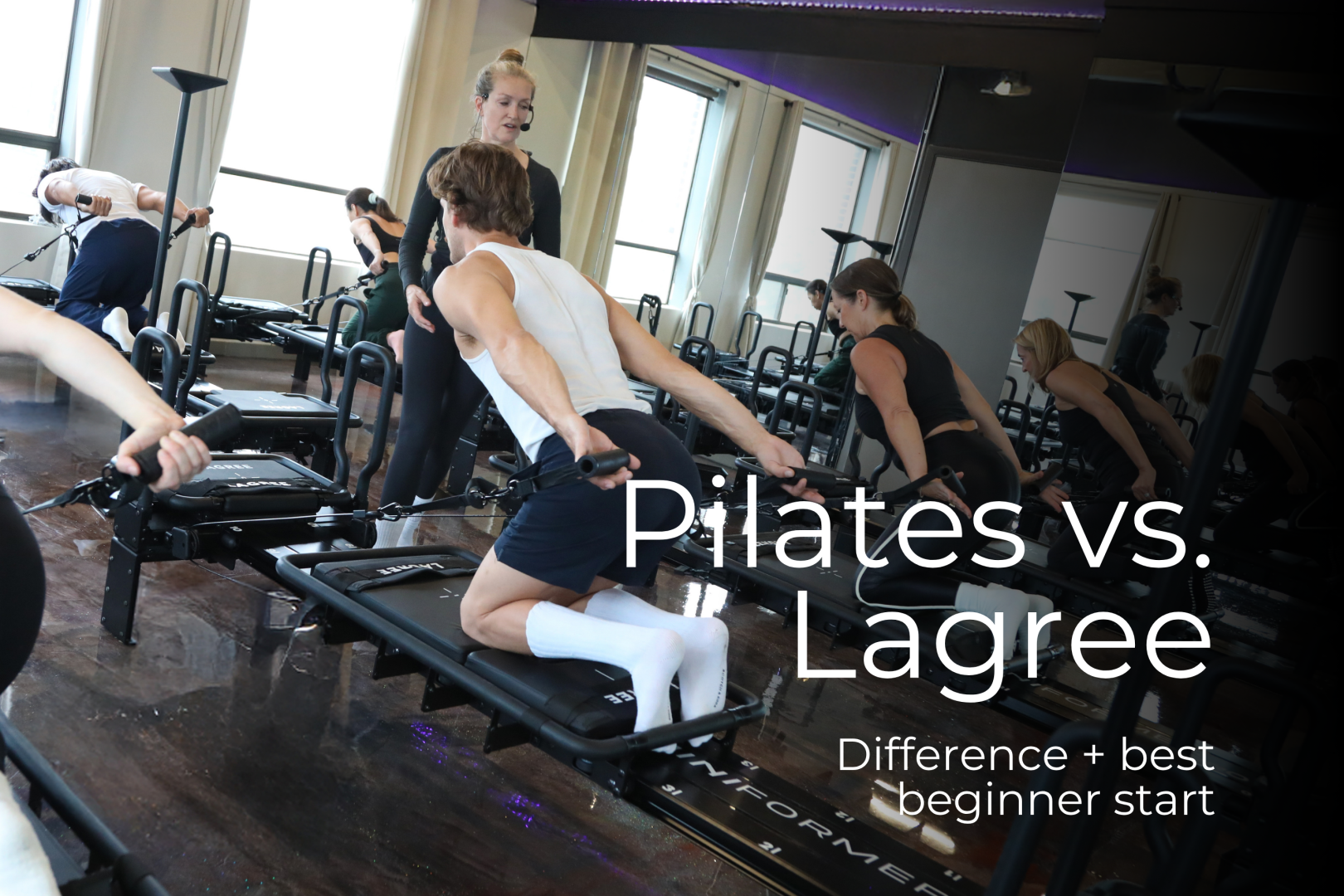
Pilates: foundational strength, core control, alignment, mobility, and stability.
Lagree: high-intensity, low-impact strength training with long “time under tension.”
Neither is “better.” The best one to start with depends on your goals, schedule, and what helps you stay consistent.
Pilates is a training method focused on:
Pilates can feel gentle and technical—or athletic and spicy—depending on the class style.
Lagree is a strength method usually taught on a specialized machine. It’s designed to be low-impact on joints while still being high-intensity for muscles.
Lagree emphasizes:
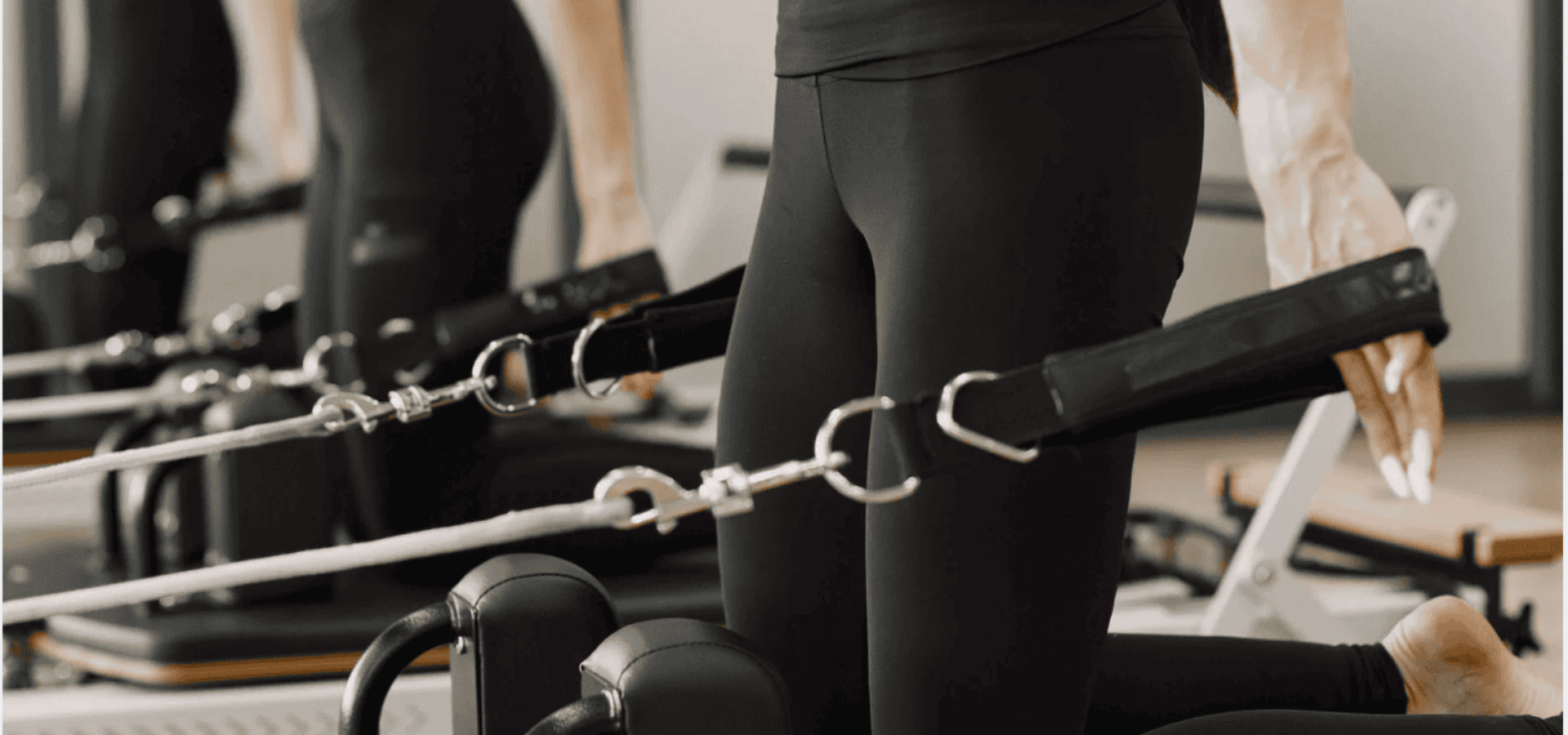
Pilates: can range from beginner-friendly to athletic
Lagree: often consistently intense due to slow tempo and long sets
Pilates: form, alignment, control, breath
Lagree: endurance, strength, and sustained muscular effort
Both can be beginner-friendly, but:
Pilates often feels like a smoother entry point if you want technique + confidence.
Lagree often feels like “I can’t believe I’m shaking” (in a good way) if you want a strength challenge.
Try one class of each within your intro-offer window. Then choose the one you’d actually repeat next week. Sign up for our intro offer for new members.
Pro tip: pick a class time you can repeat. Consistency beats a perfect one-off session.
Often, yes—for most first-timers. Lagree tends to feel harder because:
That said, some Pilates classes (especially athletic reformer) can absolutely be challenging—just in a different way.
Yes. Pilates builds strength through control, range, and stability—especially in the core, hips, back, and shoulders.
You’ll likely notice:
For visible strength changes, consistency matters more than choosing the “harder” method.
Both can support body composition changes, but neither is a guaranteed “weight loss workout.” Results depend on the full picture (sleep, stress, nutrition, daily movement, and consistency).
If your goal is to feel stronger and more toned quickly, Lagree can feel more immediate because of the intensity. If your goal is long-term strength, posture, and joint-friendly progression, Pilates is a solid base.
Both can be beginner-friendly if the studio teaches fundamentals well.
Choose Pilates if you want more technique coaching and a smoother ramp-up.
Choose Lagree if you want a strength-first challenge and you’re okay feeling wobbly while you learn.
A quick heads-up helps them coach you well.
Mention:
You don’t need a long story—just the key constraint.
Pilates: grippy socks are often recommended (especially reformer). Comfortable fitted layers help instructors cue alignment.
Lagree: grippy socks are usually required. Expect to sweat—light, breathable layers help.
Avoid super-loose pants that hide your form or get caught on equipment.
Low-impact means less pounding on joints (not necessarily “easy”).
In Pilates, low-impact often comes from controlled movement and support from the mat or equipment.
In Lagree, low-impact comes from slow, joint-friendly patterns—while the muscles work very hard.
It varies, but many people feel soreness 24–48 hours later, especially in:
If you’re very sore, add an extra rest day and keep your next class gentle. Soreness is normal; sharp pain isn’t.
2x/week: the easiest cadence for skill-building + consistency
3x/week: great momentum if recovery feels good
4+ x/week: possible, but mix intensity (e.g., 2 challenging + 2 easier/technique-focused)
If you’re doing Lagree, many beginners do best with 1–2x/week at first, then build.
Yes—and it’s a common (and effective) combo.
Use Pilates to build form, mobility, and core control.
Use Lagree to push strength and muscular endurance.
A simple split: Pilates 1–2x/week + Lagree 1–2x/week.
It depends on the cause, but many people find Pilates helpful because it emphasizes core stability, breath, and alignment. If you’re managing pain or recovering from injury, choose a beginner-focused class and ask for modifications.
(If you have a medical condition or new/worsening pain, check with a clinician first.)
Please contact the studio at info@myigita.com to discuss with our team.
Try your first week and sample both styles. 3 Lagree, Reformer, Tower & Chair, or Pilates Reformer classes for $60.
*New members only, HST will be applied at checkout.