Anatomy | Systems of the Body w/ Taylor
THE BRAIN
You can think of the brain as a central computer that controls all bodily functions. The nervous system is then an intricate cable network that relays messages back and forth from the brain to different parts of the body. It does this via the spinal cord, which runs form the brain down the back to the tail bone and contains threadlike nerves that branch out to every organ and body part.
When a message comes into the brain from anywhere in the body, the brain tells the body how to react.
For example: if you accidentally touch something hot, the nerves in your skin shoot a message of pain to your brain. The brain then sends a message back telling the muscles in your hand to pull away. Luckily, this neurological relay race takes a lot less time than it just took to read about it!
ANATOMY OF THE BRAIN
To help us further understand this central computer, lets take a look at the anatomy of the brain.
The evolutionary design of the brain consists of 3 parts:
- The hindbrain or the innermost “reptilian” brain (instinctual)
-oldest part
-controls automatic functions like heart rate, breathing, blood pressure, swallowing, blinking and digestion
-controls how you respond to unanticipated stimulus
-sits underneath the back end of the cerebrum (forebrain, neocortex) and consists of the cerebellum (responsible for balance, movement & coordination)
-pons and medulla (combined with the midbrain are often referred to as the brain stem)
2. The midbrain or Limbic brain (emotional)
-second oldest
-processes images and music
-located underneath the middle part of the fore-brain
-acting with the hind-brain, is master co-ordinator for all the messages going in and out of the brain to the spinal cord.
3. The forebrain or neocortex (rational or thinking)
-youngest
-all higher levels of thinking, ex: reading, writing
-largest and most complex
-analyzes information that comes in from the spinal cord from the 5 senses, which is then re-directed to other parts of the brain for further processing (remember hot surface ex)
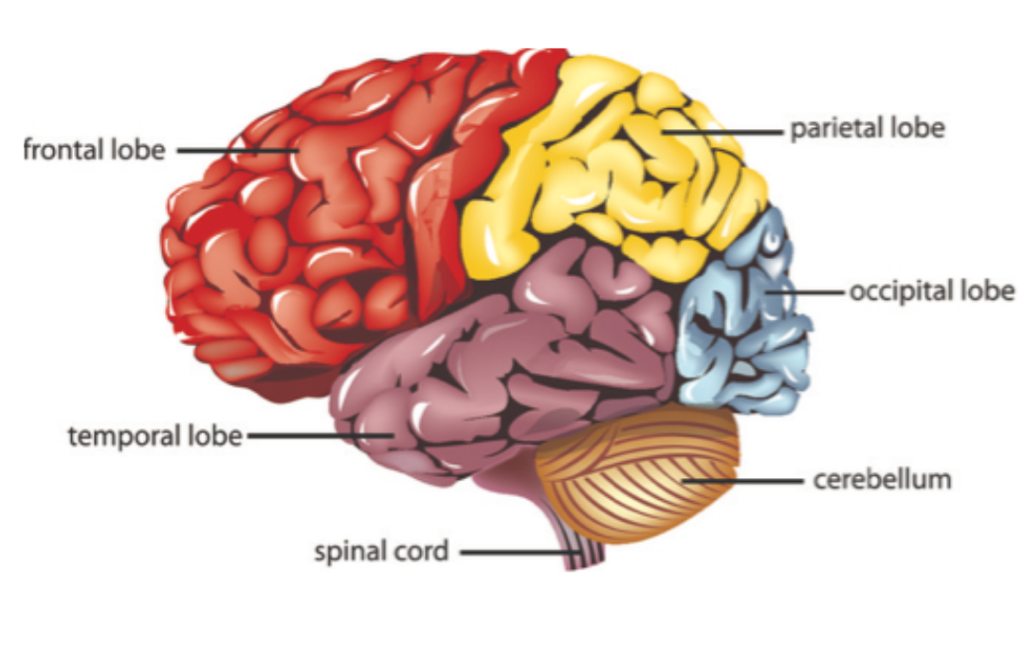
-consists of the cerebrum, which is all the folds and grooves typically seen in pictures of the brain, as well as other structures beneath that layer. Specific areas of the cerebrum are responsible for processing different types of information. They are called lobes and there are 4 of them:
-
-
- frontal lobe
- parietal lobe
- temporal lobe
- occipital lobe
-
There is also a right and a left half known as hemispheres, connected in the middle by a band of nerve fibres that enable the 2 sides to communicate. Although these sides look like mirror images of each other, most scientists agree they have different functions:
LEFT
logical
factual
rational
objective
analytical
verbal language
deductive
linear
RIGHT
qualitative
creative
subjective
visual
exploratory
inductive
experimental
intuitive
non-linear
THE NERVOUS SYSTEM
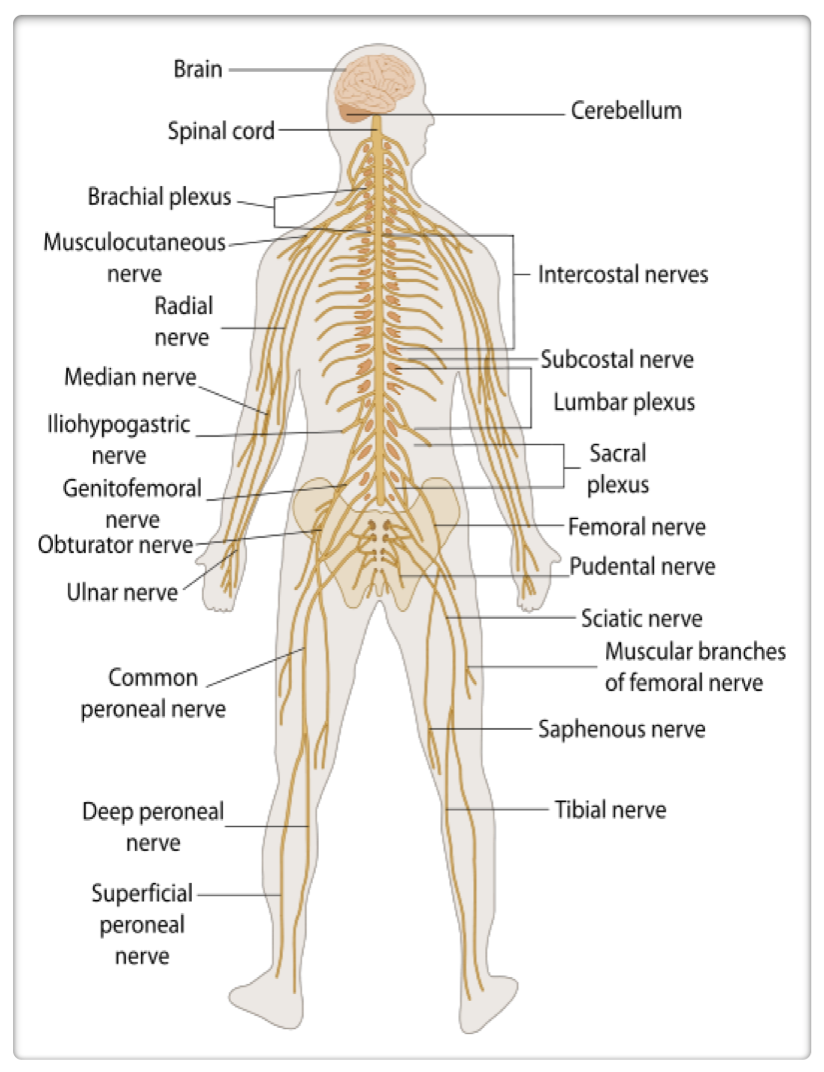
The nervous system (system of nerves and nerve plexus) is divided into two main systems, the central nervous system (CNS) and the peripheral nervous system (PNS).
The Central Nervous System
The spinal cord and the brain make up the CNS. Its main job is to get the information from the body and send out instructions.
-the brain communicates with the body through the spinal cord and the nerves
-the spinal cord is a thick bundle of nerves (made up of neurons) that is encased in the spinal column and emerges at different points along the spine
-nerves divide many times as they leave the spinal cord so that they may reach all parts of the body. the thickest nerve is one inch think (sciatic) and the thinest is about the size of a human hair (trochlear, a cranial nerve)
The Peripheral Nervous System
The PNS consists of the nerves and the ganglia (cluster) that protrude outside the brain and the spinal column.
It is sub-divided:
-the somatic nervous system which controls voluntary movement and the skin sensors
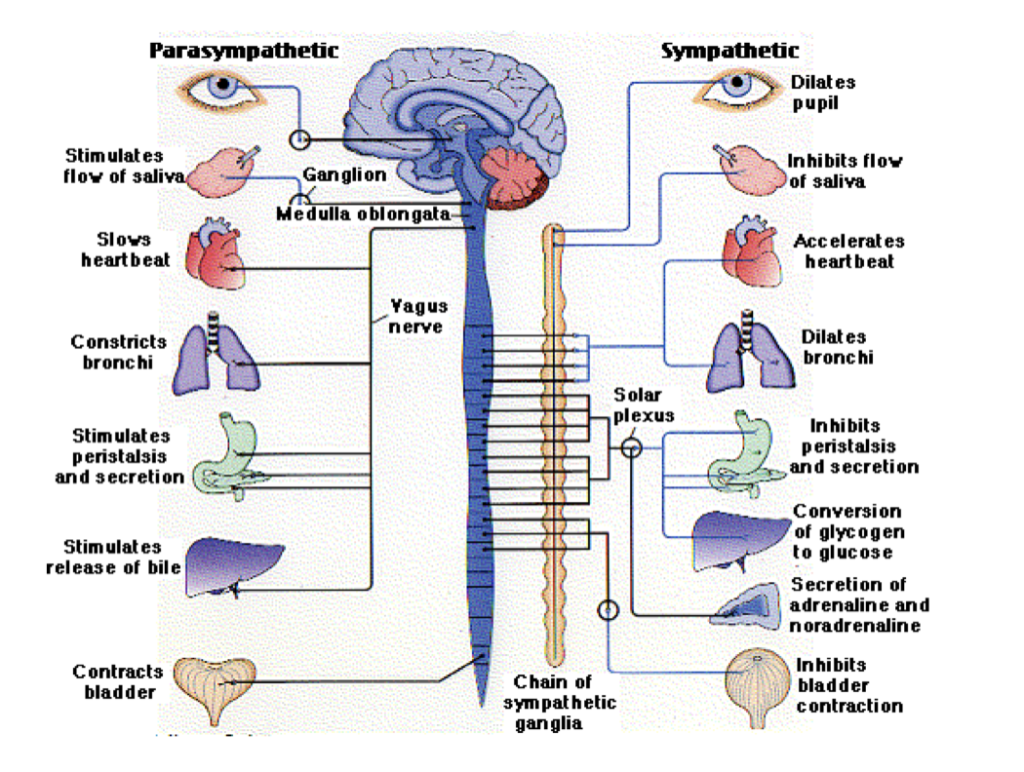
-the autonomic nervous system , which controls involuntary movement internally (the organs). It is divided in to 2 parts: the parasympathetic, sympathetic nervous systems
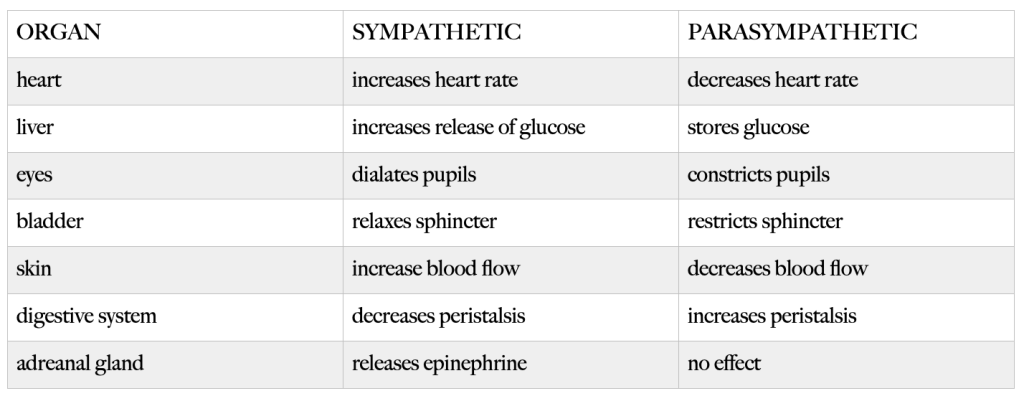
The sympathetic nervous system: responds to impending danger and is responsible for the increase of one’s heartbeat and blood pressure, among other physiological changes (fight or flight response)
The parasympathetic nervous system: returns the body to normal levels after adjustments to stress. It is evident when a person is resting and feeling relaxed. It is responsible for the constriction of the pupil, the slowing of the heart and the dilation of the blood vessels and digestion of food.
The Nerve Plexus
A plexus is an interwoven network of spinal nerves. from this plexus, larger motor nerves emerge outward from the spine to move the body.
There are five major plexus on each side of the body that serve a communication highways from the body to the brain.
- the cervical plexus : innervates the muscles of the neck, the skin of the neck, the back of the head, and the diaphragm
- the brachial plexus: innervates the shoulder and the upper limbs
- the lumbar plexus: innervates the muscles and skin of the abdominal wall
- the sacral plexus: innervates the buttocks and lower limbs. the nerves divide into smaller branches. Within this plexus is the sciatic nerve.
- the coccygeal nerve plexus: ends just beyond the tailbone
*The solar plexus, also referred to as the celiac plexus, needs a special mention. Although termed a ‘plexus’ it does not have the same number of nerves emerging as the other 5 plexus. However, it is significant in yoga because it is located where the 3rd chakra (Manipura) sits. This plexus also contains the vagus nerve** and many others that connect with the autonomic nervous system (both the sympathetic and parasympathetic).This plexus connects directly to the limbic brain (our emotional centre).
**Vagus nerve: involved in the parasympathetic nervous system is one of the most important cranial nerves; originating in the brain stem and moving down through the carotid artery, heart, diaphragm and ending in the abdominal cavity.
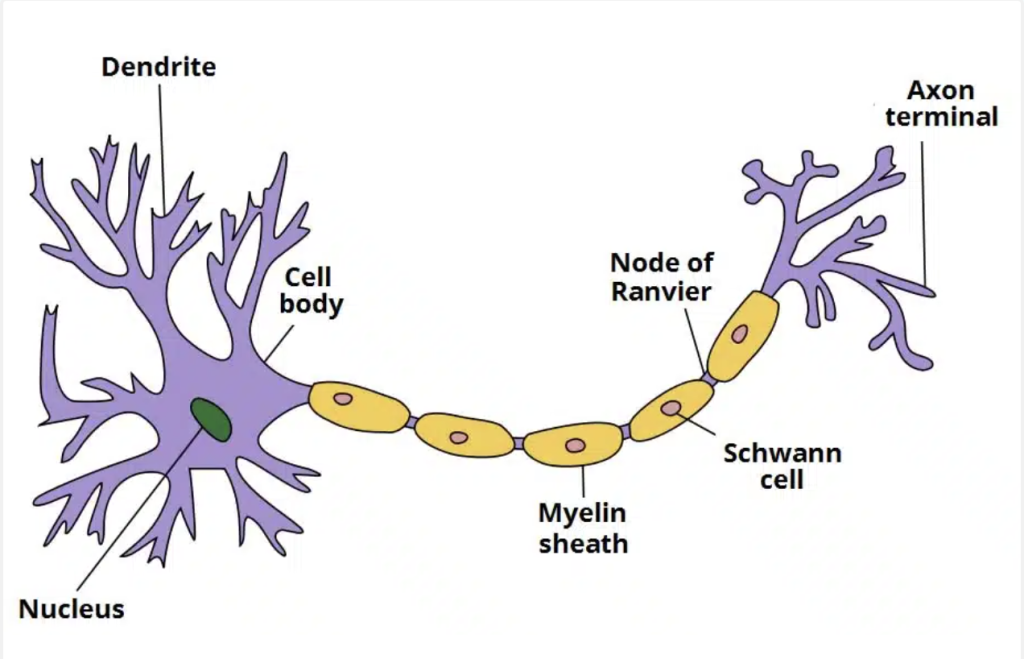
There are 2 types of neurons that carry information to and from the brain.
1. Sensory neurons carry information from the internal or external environments to the brain
2. Motor neurons carry information from the brain to the muscles and glands and organs to take action
-these nerve cells or neutrons are ‘wired” together in the form of electrical impulses, to form a communication system
-within each neutron there are three basic parts: the dendrites, the cell body, and the axon
-The connections between the cells are known as synapses. Axon and dendrites are specialized structures designed to transmit and receive information to other cells.
-Each nerve is a bundle of hundred or thousands of neutrons (nerve cells).
-Unlike other body cells, neutrons stop reproducing shortly after birth. Some parts of the brain have more neutrons at birth than later in life because neutrons die and are not replaced.
-while neutrons do not reproduce, research has shown that new connections between neutrons form throughout life.
THE ENDOCRINE SYSTEM
Just as the nervous system sends electrical messages to control and coordinate the body, the endocrine system has a similar job, but uses chemicals to “communicate”. A gland is a group of cells that produce and secrete these chemicals. The gland selects and removes materials from the blood, processes them and secretes a finished chemical product for use somewhere in the body.
These chemicals are known as hormones. The endocrine system is instrumental in regulating mood, growth and development, tissue function, metabolism, sexual function and reproductive processes.
In general, the endocrine system is in charge of body processes that happen slowly. Faster processes like breathing and body movement are controlled by the nervous system.
Although the nervous system and endocrine system are separate systems, they often work together to help the body function properly.
The hormones transfer information and instructions from one set of cells to another. Many different hormones move through the bloodstream, but each type of hormone is designed to affect only certain cells.
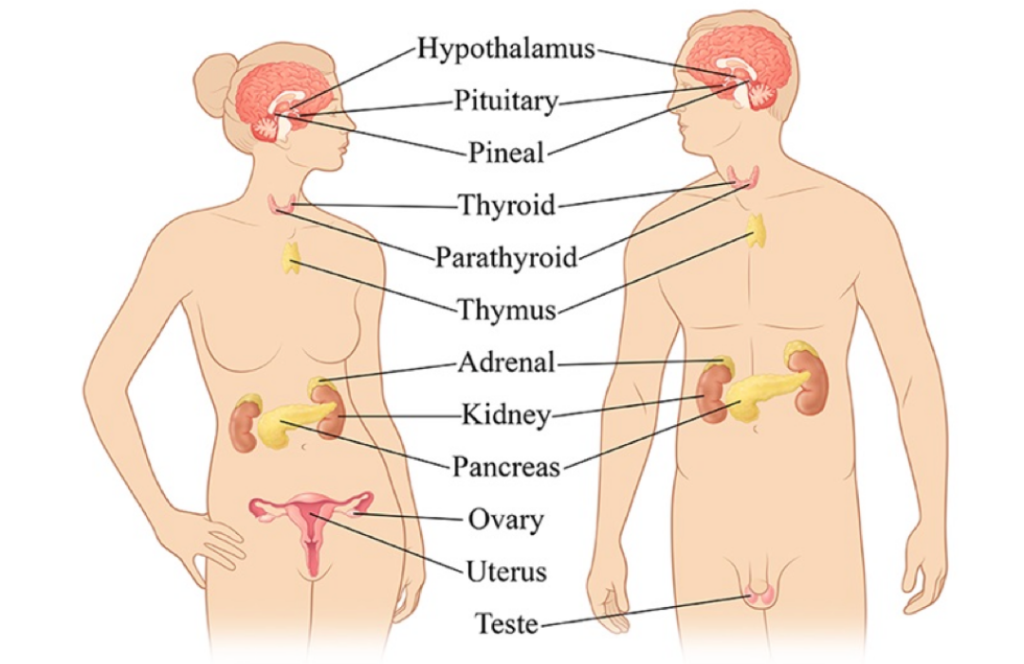
HYPOTHALYMUS
- a collection of specialized cells, located in the lower central part of the brain, is the main link between the endocrine and the nervous systems.
- Nerve cells in the hypothalamus control the pituitary gland by producing chemicals that either stimulate or suppress hormone secretions from the pituitary.
PITUITARY
- Although it is no bigger than a pea, the pituitary gland, located at the base of the brain just beneath the hypothalamus, is considered the most important part of the endocrine system.
- It’s often called the “master gland” because it makes hormones that control several other endocrine glands.
- The production and secretion of pituitary hormones can be influences by factors such as emotions and changes in the seasons.
- the hypothalamus provides information sensed by the brain to the pituitary (such as environmental temperature, light exposure patterns, and feelings)
This tiny gland is divided into two parts: the anterior lobe and the posterior lobe.
- the anterior lobe regulates the activity of the thyroid, adrenals and reproductive glands.
- the posterior lobe produces hormones such as:
- growth hormone: stimulates the growth of bone and other body tissues and plays a role in the body’s handling of nutrients and minerals
- Prolactin: activates mild production in women who are breastfeeding
- thyrotropin: stimulates the thyroid gland to produce thyroid hormones
- corticotropin: stimulates the adrenal gland to produce certain hormones
- endorphins: chemicals that act on the nervous system and reduce feelings of pain
- oxytocin: triggers the contractions of the uterus in a woman having a baby
- also signals the reproductive organs to make sex hormones, and controls ovulation and the menstrual cycle in women
- releases an antidiuretic hormone, controlling the balance of water in the body.
THYROID
- located in the front part of the lower neck
- Shaped like a bow tie of butterfly and produces the thyroid hormones thyroxine and triiodothyronine. These hormones control the rate at which cells burn fuels from food to produce energy.
- the production and release of thyroid hormones is controlled by thyrotropin which is secreted by the pituitary gland. The more thyroid hormone there is in a persons bloodstream, the faster chemical reactions occur in the body.
- Thyroid hormones are important in children as they help bones grow and develop, they also play a role in the development of the brain and nervous system.
Parathyroids
- attached to the thyroid are four tiny glands that function together called the parathyroids. They release parathyroid hormones, which regulates the level of calcium in the blood
ADRENALS
-2 triangular adrenal glands, one on the top of each kidney
-the adrenal glands have two parts, each of which produces a set of hormones which have a different function:
- the outer part, the adrenal cortex: produces hormones called corticosteroids that regulate the salt/water balance in the body, the body’s response to stress, metabolism, the immune system and sexual development and function
- the inner part, the adrenal medulla: produces hormones such as epinephrine or adrenaline which increases blood pressure and heart rate when the body experiences stress
PINEAL
-located in the middle of the brain
-secretes melatonin, a hormone that may help you fall asleep and wake in the morning
PANCREAS
-The pancreas, although not a gland, is among the body’s main hormone producing organs
-secretes digestive enzymes, as well as insulin and glucagon. they work together to maintain a steady level of glucose, in the blood to keep blood sugars level.
GONADS
-the reproductive glands
-main source of sex hormones
The male gonads, or the testicles are located in the scrotum. They secrete androgens, the most important of which is testosterone. These hormones tell a male when it’s time to make the changes associates with puberty, like penis and height growth, deepening voice, facial hair and pubic hair. Working with hormones from the pituitary gland, testosterone also signal to the male body when it’s time to produce sperm in the testes.The female gonads, the ovaries, and located in the pelvis. They produce eggs and secrete female hormones estrogen and progesterone. Estrogen is involved when a girl begins to go through puberty. estrogen and progesterone are involved in the regulation of menstrual cycles, and also play a role in pregnancy.
THYMUS
-The Thymus Gland is part of the Immune system it is positioned in the upper part of the chest cavity, directly behind the sternum. It is pink-ish gray in colour and blends in with the surrounding tissue as you age.
-Two irregularly shaped parts make up the thymus, and though it continues to grow throughout puberty, the gland then begins to diminish in size.
-The role of the thymus gland is to process lymphocytes or white blood cells (our fighter cells of infections and disease) that travel the body through the bloodstream
Yoga and the Glands
The endocrine system mediates the subtle relationship of body and mind- emotions such as fear of rage, love or grief, both reflect hormonal activity and influence it strongly.
The glandular system works hand in hand with the autonomic nervous system as our thoughts and emotions trigger the nervous system which then triggers the glands to produce the chemicals.
Ultimately the brain, mind, pituitary gland and nervous system guide the endocrine system.
In yoga we are able to use asana to massage and create a circulatory effect on the glands to help balance the hormones if they are under or overactive.
For example:
headstand is a great asana for the pituitary gland
shoulder stand for the thyroid
peacock & locust for the pancreatic and adrenal glands
any forward fold has a calming and balancing effect on the adrenals
any backbend stimulates or “wakes” up the adrenals
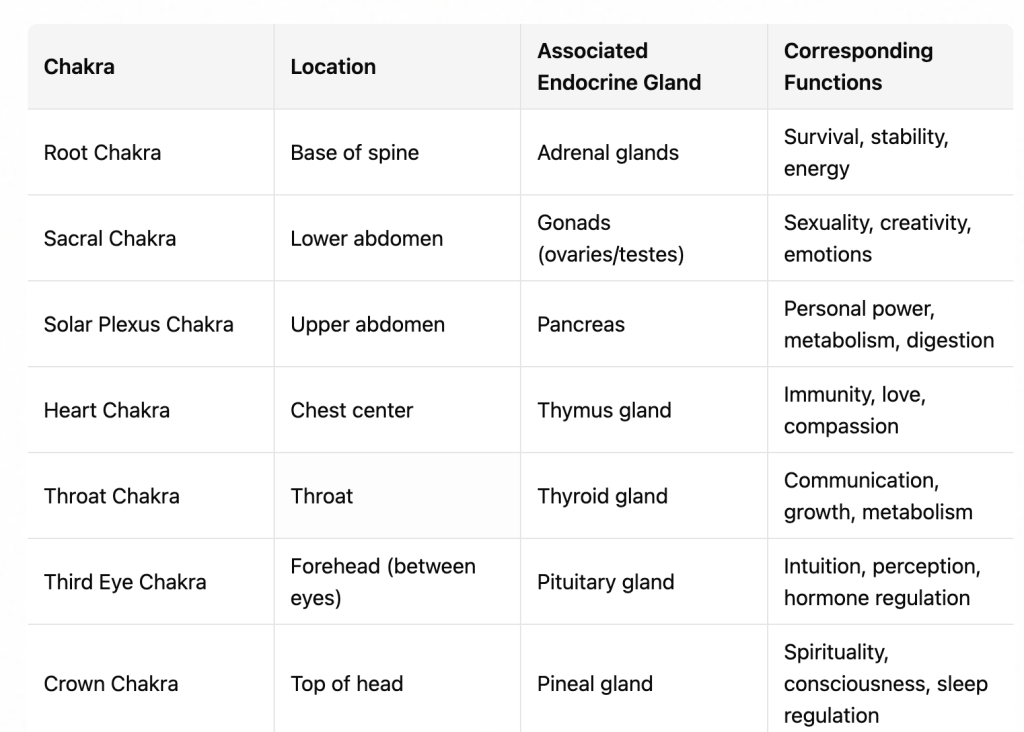
The relationship between the Endocrine System & the Chakras
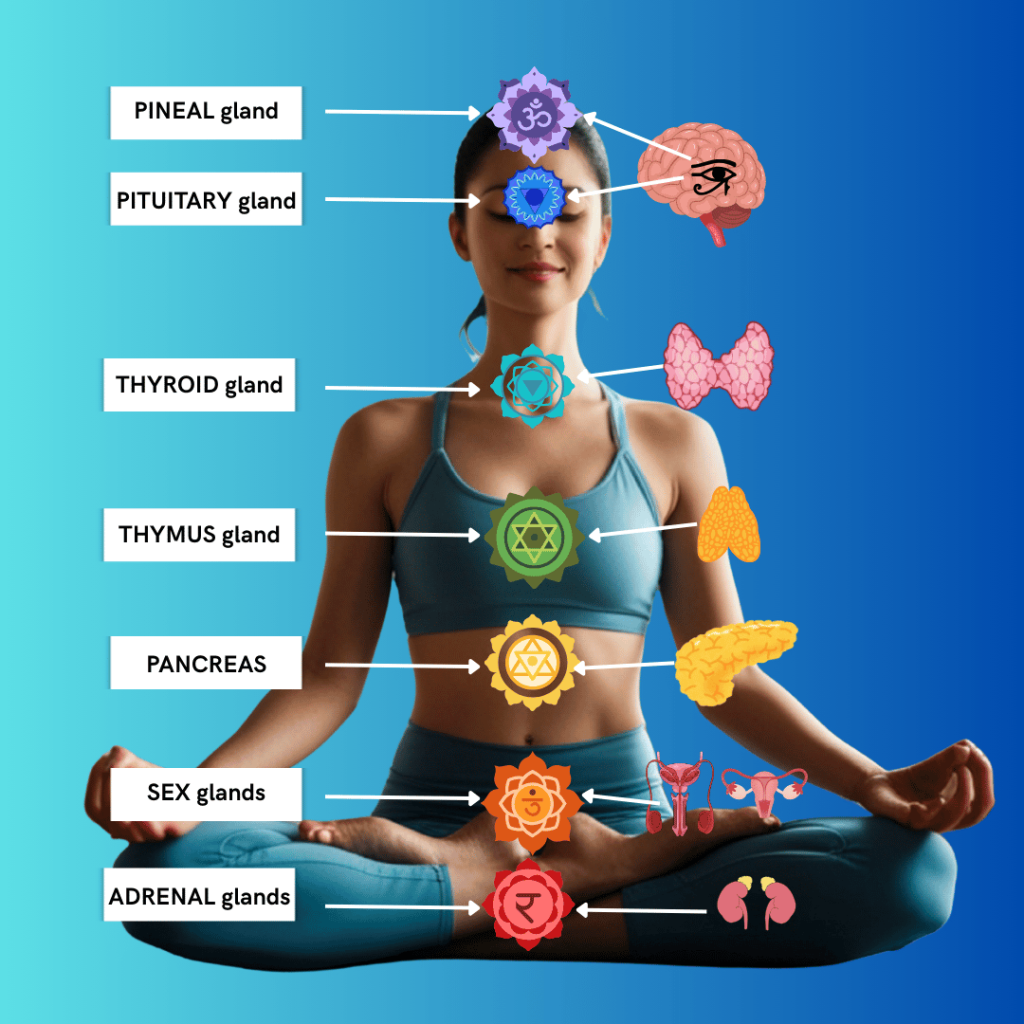
The endocrine system and the chakra system are two different frameworks for understanding how the body and mind interact, one from a scientific perspective and the other from a more spiritual or traditional perspective. However, some correlations are often drawn between the two, especially in holistic health, yoga, and alternative medicine. They are as follows:
THE LYMPHATIC SYSTEM
The lymphatic system works in close cooperation with other body systems to perform these important detoxing functions:
-aids the immune system in destroying pathogens and filtering waste so that the lymph can be safely returned to the circulatory system
-removing excess fluid, waste, debris, dead blood cells, pathogens, cancer cells and toxins from the body’s cells and the tissue spaces between them
-works with the circulatory system to deliver nutrients, oxygen, and hormones from the blood to the cells that make up the tissues of the body.
Where the bloodstream is pumped by the heart (it circulates throughout the body and is cleansed by being filtered by the kidneys) the lymphatic system does not have a pump. instead this system is designed so that lymph only flows upward through the body traveling from the extremities (feet and hands) and upward through the body toward the neck. As it travels through the body, lymph nodes where it is filtered. At the base of the neck, the lymph enters the subclavian veins and once again becomes plasma in the bloodstream.
Lymph Nodes
There are between 600-700 lymph nodes present in the average human body. These nodes filter the lymph before it can be returned to the circulatory system. Although these nodes can increase or decrease in size throughout life, any nodes that have been damaged or destroyed, do not regenerate.
Capillaries and vessels transport the lymph fluid through the body.
-In Yoga asana, we can assist the lymph nodes job of eliminating toxins from the lymph cellular fluid through compression and releasing
The lymphocytes (white blood cells) stop at the lymph nodes to ensure everything is working properly, and if not, it is believed they jump into action to fix any issues. They play a part in cellular immunity by blocking the invasion of harmful foreign agents, viruses and bacteria. They also aid in preventing abnormal cell growth that occurs with cancer.
THE CARDIOVASCULAR SYSTEM
Your heart and circulatory system make up your cardiovascular system. Your heart works as a pump that pushes blood to the organs, tissues and cells of your body. Blood delivers oxygen and nutrients to every cell and removes the carbon dioxide and waste products made by those cells.
Blood is carried from your heart to the rest of your body through a complex network of arteries, arterioles and capillaries.
Blood is returned to your heart through venues and veins. If all the vessels of this network in your body were laid end-to-end, they would extend for about 60,000 miles (95000km) which is far enough to circle the earth more than 2x!!
The one-way highway carries blood to all parts of your body. This process is called circulation.
-Arteries carry oxygen-rich blood away from your heart and views cary oxygen-poor blood back to your heart.
-In pulmonary circulation the roles are switched. It is the pulmonary artery that brings oxygen-rich blood back to your heart.
-Twenty major arteries make a path through your tissues, where they branch into smaller vessels called arterioles.
-arterioles further branch into capillaries the deliverers of oxygen and nutrients to your cells.
-most capillaries are thinner than a strand of hair
YOUR HEART
Your heart is located between your lungs in the middle of your chest, behind and slightly to the left of your breastbone (sternum). A double layered membrane called the pericardium surrounds your heart like a sac.
The outer layer of the pericardium surrounds the roots of your heart’s major blood vessels and is attached by ligaments to your spinal column, diaphragm, and other parts of your body.
The inner layer of the pericardium is attached to the heart muscle. A coating of fluid separates the two layers of membrane, letting the heart move as it beats, yet still be attached to your body.
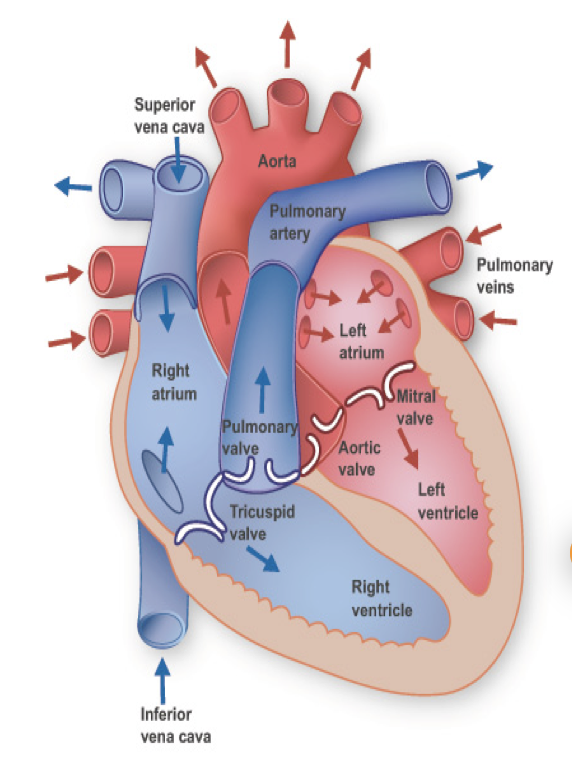
Your heart has 4 chambers. The upper chambers are called the left and right atriums, and the lower chambers are called the left and right ventricles. The left ventricle is the largest and strongest chamber in your heart. The left ventricle’s chamber walls are only about a half-inch thick, but they have enough force to push blood through the aortic valve and into your body.
THE HEART VALVES
Four types of valves regulate blood flow through your heart:
- The tricuspid valve. It regulates blood flow between the right atrium and the right ventricle.
- The pulmonary valve. It controls blood flow from the right ventricle into the pulmonary arteries, which carry blood to your lungs to pick up oxygen.
- The mitral Valve. It lets oxygen-rich blood from your lungs pass from the left atrium into the left ventricle
- The aortic valve. It opens the way for oxygen-rich blood to pass from the left ventricle into the aorta, your body’s largest artery, where it is delivered to the rest of your body.
Oxygen depleted blood, or (blood that has circulated through your system having delivered O2 to all of your body’s needs in tissues and organs) is then filtered into the right side of the heart through the superior and inferior vena cavity.
It is then pumped through the pulmonary valve and then through the pulmonary artery and is moved in the lungs.
Once in the lungs, the blood releases carbon dioxide in exchange for oxygen at the alveoli level and then sends this oxygen rich blood back in to the left side (atrium and ventricle) of the heart through the pulmonary arteries and then is pumped back into the entire body through the aorta.
The valves with in the heart keep the blood flowing in a one way direction so as not to mix oxygen rich blood with oxygen depleted blood.
The heart has its own electrical system which allows it to continue to beat or contract.
The pressure that this system is measured with is known as Systolic and Diastolic pressure, Blood Pressure.
The valves with in the heart keep the blood flowing in a one way direction so as not to mix oxygen rich blood with oxygen depleted blood.
The heart has its own electrical system which allows it to continue to beat or contract.
The pressure that this system is measured with is known as Systolic and Diastolic pressure, Blood Pressure.
The Systolic or first and larger number of the equation is the force that the blood flows from the heart into the arteries. The Diastolic(the second and smaller number of the equation) is the force as the heart relaxes, allowing the blood to flow back into the heart.
RESPIRATORY SYSTEM
Our cells and tissues need oxygen to survive, they also need the resulting carbon dioxide to be flushed out. The primary organs for breath are the two lungs where blood and air are mixed and exchanges of intake and outtake breath are made.
Each lung has approximately 1500 miles of airways and 300 million alveoli, where the exchange takes place.
The alveoli are made up of many elastin fibres giving the lungs great elasticity aiding in exhalation. The lungs are surrounded by a pleural membrane that attaches to the ribs and diaphragm enabling movement and maintain the support and shape of the lungs.
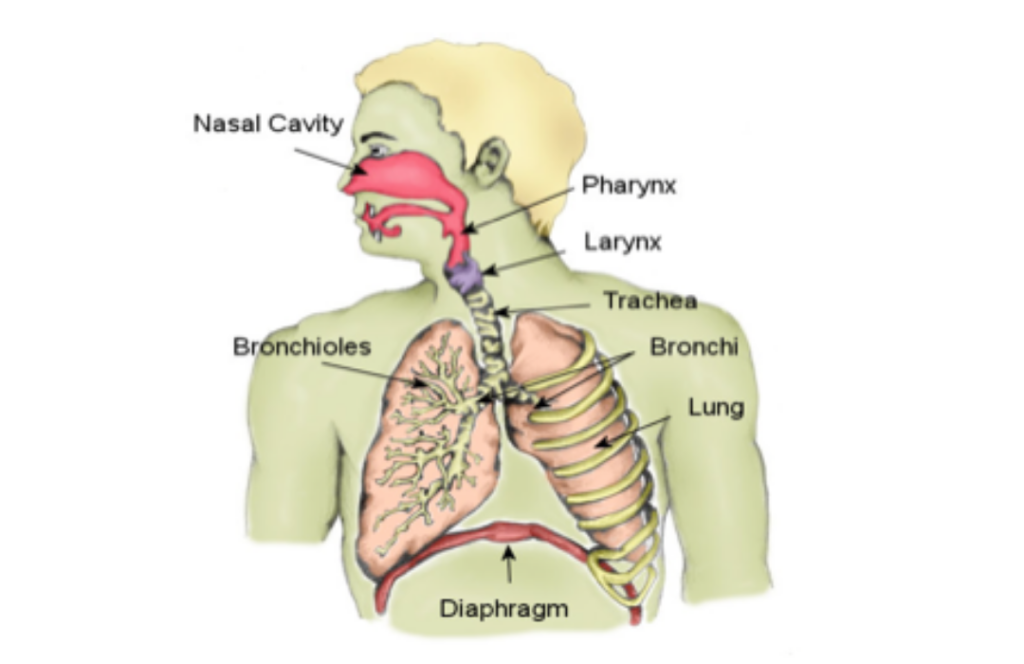
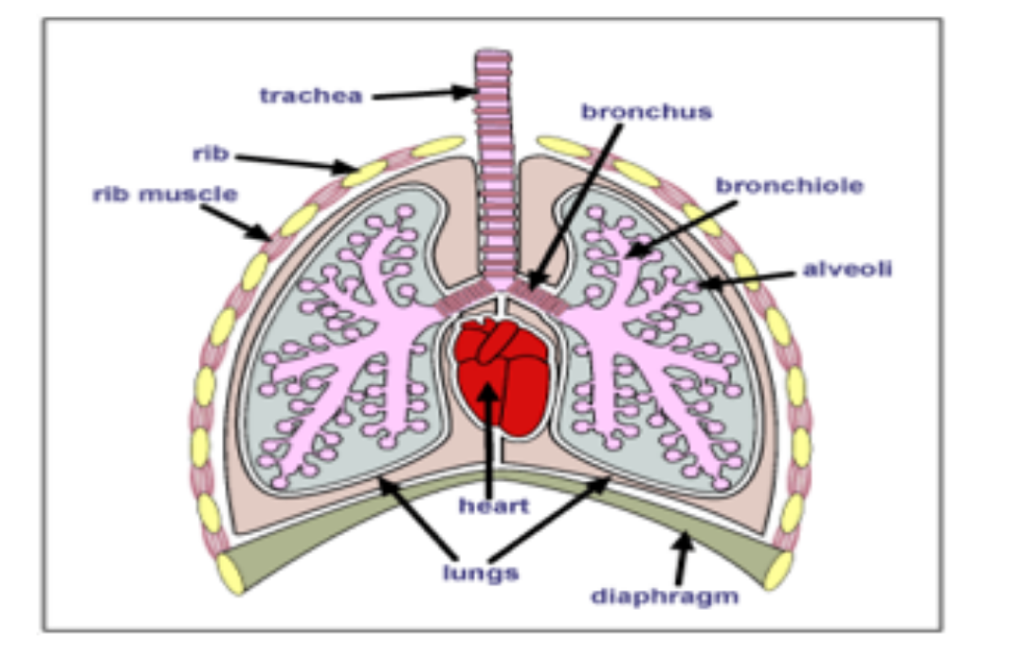
Oxygen is brought in through the nasal passages, where a great number of nerves allow for a higher sensitivity to breath movement, as well is more refined than the mouth for filtering and conditioning the breath entering the body.
The warmed, filtered air, then enters a funnelled shape passage called the pharynx moving downwardly to the larynx [where our vocal chords resonate for vocal production].
From here the breath travels to the trachea and to the the right and left primary bronchi and then into the two lungs.
From here the breath is passed through the secondary bronchi and then it is filtered through the bronchioles.
In turn the bronchioles open into the alveoli which are attached to blood capillaries.
The oxygen (O2) in the lungs enters the bloodstream through these capillaries and the red blood cells attach themselves to the oxygen.
The blood is then directed back through the left side of the heart and pumped through the aorta to the rest of the body.
DIGESTIVE SYSTEM
The digestive system is comprised of many internal organs that allow the body to ingest, digest, process and eliminate food from our bodies.
Food is our fuel, and its nutrients give our bodies’ cells the energy and substances they need to operate.
But before food can do that, it must be digested into small pieces the body can absorb and use.
During the process of absorption, nutrients that come from the food (including carbohydrates, proteins, fats, vitamins, and minerals) pass through channels in the intestinal wall and into the bloodstream. The blood works to distribute these nutrients to the rest of the body. The waste parts of food that the body can’t use are passed out of the body as feces.
Every morsel of food we eat has to be broken down into nutrients that can be absorbed by the body, which is why it takes hours to fully digest food. In humans, protein must be broken down into amino acids, starches into simple sugars, and fats into fatty acids and glycerol. The water in our food and drink is also absorbed into the bloodstream to provide the body with the fluid it needs.
HOW DIGESTION WORKS
The digestive system is made up of the digestive tract and the other abdominal organs that play a part in digestion, such as the liver and pancreas. The digestive track is the long tube of organs — including the esophagus, stomach, and intestines — that runs from the mouth to the anus. An adult’s digestive tract is about 30 feet (about 9 meters) long.
Digestion begins in the mouth, well before food reaches the stomach. When we see, smell, taste, or even imagine a tasty meal, our salivary glands, which are located under the tongue and near the lower jaw, begin producing saliva.
This flow of saliva is set in motion by a brain reflex that’s triggered when we sense food or think about eating. In response to this sensory stimulation, the brain sends impulses through the nerves that control the salivary glands, telling them to prepare for a meal.
As the teeth tear and chop the food, saliva moistens it for easy swallowing. A digestive enzymes found in saliva start to break down some of the carbohydrates (starches and sugars) in the food even before it leaves the mouth.
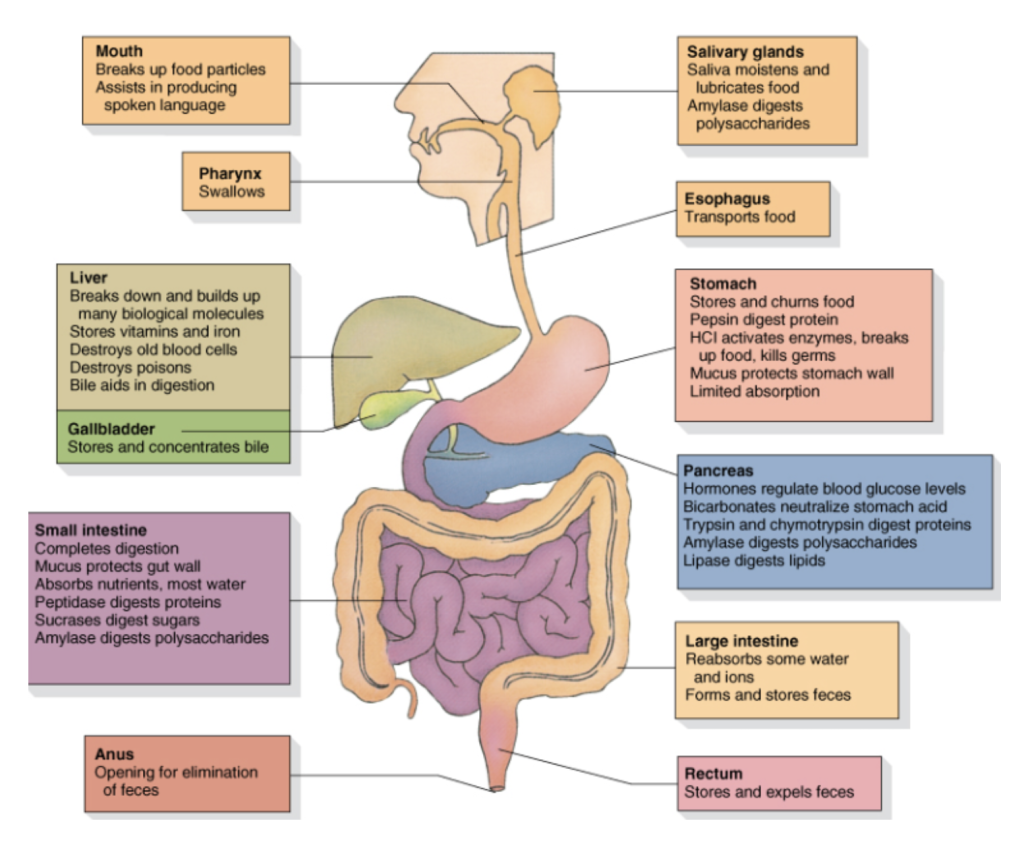
Swallowing, which is accomplished by muscle movements in the tongue and mouth, moves the food into the throat, or pharynx. The pharynx, a passageway for food and air, is about 5 inches long. A flexible flap of tissue called the epiglottis reflexively closes over the windpipe when we swallow to prevent choking.
From the throat, food travels down a muscular tube in the chest called the esophagus. Waves of muscle contractions called peristalsis force food down through the esophagus to the stomach.
At the end of the esophagus, a muscular ring or valve called a sphincter allows food to enter the stomach and then squeezes shut to keep food or fluid from flowing back up into the esophagus.
The stomach muscles churn and mix the food with acids and enzymes, breaking it into much smaller, digestible pieces. An acidic environment is needed for the digestion that takes place in the stomach. Glands in the stomach lining produce about 3 quarts of these digestive juices each day.
Most substances in the food we eat need further digestion and must travel into the intestine before being absorbed. When it’s empty, an adult’s stomach has a volume of one fifth of a cup , but it can expand to hold more than 8 cups of food after a large meal.
By the time food is ready to leave the stomach, it has been processed into a thick liquid called chyme. A walnut-sized muscular valve at the outlet of the stomach called the pylorus keeps chyme in the stomach until it reaches the right consistency to pass into the small intestine.
Chyme is then squirted down into the small intestine, where digestion of food continues so the body can absorb the nutrients into the bloodstream.
The liver (located under the ribcage in the right upper part of the abdomen), the gallbladder (hidden just below the liver), and the pancreas (beneath the stomach) are essential to digestion.
The liver produces bile, which helps the body absorb fat. Bile is stored in the gallbladder until it is needed. The pancreas produces enzymes that help digest proteins, fats, and carbs. It also makes a substance that neutralizes stomach acid. These enzymes and bile travel into the small intestine, where they help to break down food.
The liver also plays a major role in the handling and processing of nutrients, which are carried to the liver in the blood from the small intestine.
From the small intestine, undigested food (and some water) travels to the large intestine through a muscular ring or valve that prevents food from returning to the small intestine.
By the time food reaches the large intestine, the work of absorbing nutrients is nearly finished. The large intestine’s main function is to remove water from the undigested matter and form solid waste that can be excreted.
The large intestine is made up of three parts:
The cecum is a pouch at the beginning of the large intestine that joins the small intestine to the large intestine. This transition area expands in diameter, allowing food to travel from the small intestine to the large. The appendix, a small, hollow, finger-like pouch, hangs at the end of the cecum. Doctors believe the appendix is left over from a previous time in human evolution. It no longer appears to be useful to the digestive process.
The colon extends from the cecum up the right side of the abdomen, across the upper abdomen, and then down the left side of the abdomen, finally connecting to the rectum.
The colon has three parts: the ascending colon; the transverse colon, which absorb fluids and salts; and the descending colon, which holds the resulting waste. Bacteria in the colon help to digest the remaining food products.
Again the ability of yoga asana to create circulation and movement in the internal organs, particularly the colon assists in the digestion process by moving food through the track avoiding stagnation which creates blockages that can lead to illness and disease.
The rectum is where feces are stored until they leave the digestive system through the anus as a bowel movement.
Our elimination process is directly related to our autonomic nervous system; the parasympathetic side will assist in the digestion and elimination of food and the sympathetic side will reserve that energy and redirect it towards systems in the body that demand energy for “fight and flight”.