Asana | Standing & Balancing Poses
BALANCING
All standing poses have a balance component regardless of whether or not you’re on one leg. Balancing poses in yoga are tricky and can be very frustrating. We all have little inconsistencies or imbalances in our bodies, caused by the use of our “dominant” sides. Because of our diverse, unique lifestyles and activities, these imbalances can range from hardly noticeable in some people to quite pronounced in others. Its effects can been seen in discrepancies in strength and flexibility from one side to the other, so of course balance will also be affected. Balancing is the part of practice where we tend to lose the focus on the breath. We swear that our mat has a mind of it’s own. It’s hard to breathe and remain calm when our ankles are shaking. So, how can you teach your body to stick that balance pose without shaking, and falling? Practice, practice, practice. and hopefully you’ll find some of the tips below helpful.
TIPS FOR BETTER BALANCE:
1. FIND YOUR FOOTING – WORK FROM THE GROUND UP!
Stabilize your ankles by engaging Pada Bandha; grounding down through all four corners of the foot. Try to create the feeling and shape of a suction cup with the arches of your feet at the centre of this suction cup. Apply to both supporting and flying leg to create stability and strength in the pose. It will be easier to apply proper alignment in the knees and hips when the ankles are stable.
2. STRONG AND STABLE KNEE IS KEY.
Active, strong, and secure knee joints ensure stability for balance and transition between poses. The muscles of the knee flex upon the joint by engaging the tendons that hold the kneecap in place, creating a “lifting” motion and slowly drawing the kneecap up and into the thigh muscles. Engage the gluteus muscle of the grounding leg to help stabilize the pelvis and free the quadriceps to do their job. We tend to sink down into our hips here as if we were holding a laundry basket on one side. To avoid this and elongate out of that hip, we straightenthe grounding leg and activate our thigh muscles to make some space for the hip crest to be free. These actions support the hip joint and secure the pelvis.
3. CREATE A “CORSET”
The core plays a pivotal role in balancing. A strong core stabilizes the spine and the upper body while balancing. Engaging the lower belly muscles, locks the pelvis in place, supports the lower back, and strengthens the lower belly/hip joint connection. A strong core acts as an anchor, and helps us find our fulcrum in any balance pose, leading to less shaking, and falling.
4. STABILIZE THE BREATH
Try it. Take some deep breaths and note the stillness that takes hold during the pauses between the inhales and the exhales. Taking nice slow, even breaths in a balancing poses will naturally bring the tremors to a standstill.
5. DON’T BLINK!
We know there are 9 traditional dristi points, however, sometimes you need to deviate from these until you can find Sthira & Sukha. When you are trying to find balance in a pose the best place to start is the ground; either your mat or the floor in front of your mat. Steady your eyes either on a point or an area (I prefer the later), and then try not to blink! Once you find the stillness required you can try taking your gaze to where it is supposed to be in the classical sense. As a general rule, gazing down is the easiest, taking your gaze along the horizon is intermediate, then up to the sky is hold the most challenge.
6. EMPTY THE MIND
Nothing stabilizes the pose better then calming the mind, and keeping those thoughts at bay. Easier said than done however! Make it your intention to practice meditation while doing asana.
STANDING | BALANCING POSES
These poses are great to do at the beginning of a yoga practice. They help to loosen up the fascial tissue, alleviate back pain, and immediately energize and revitalize. From an energetic standpoint it is said that side bends and twists help to “detox” the liver and spleen (meridian lines). These poses are great to do anytime you need quick energy boost! They also help to relieve anxiety and stress.
The poses in this category that we are covering in this class are :
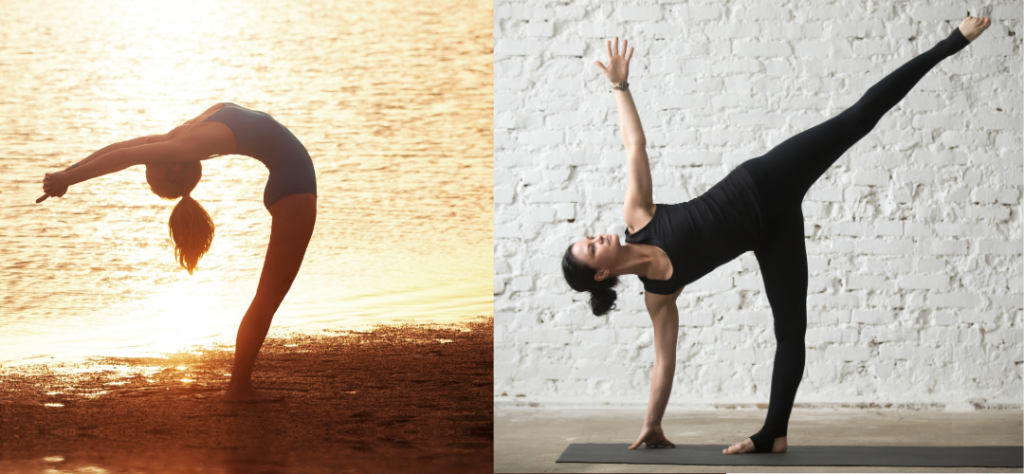
- Ardha Chandrasana (Bishnu Gosh)- Halfmoon/ Standing Side bend/backbend
- Garudasana- Eagle Pose
- Vrkshasana – Tree Pose
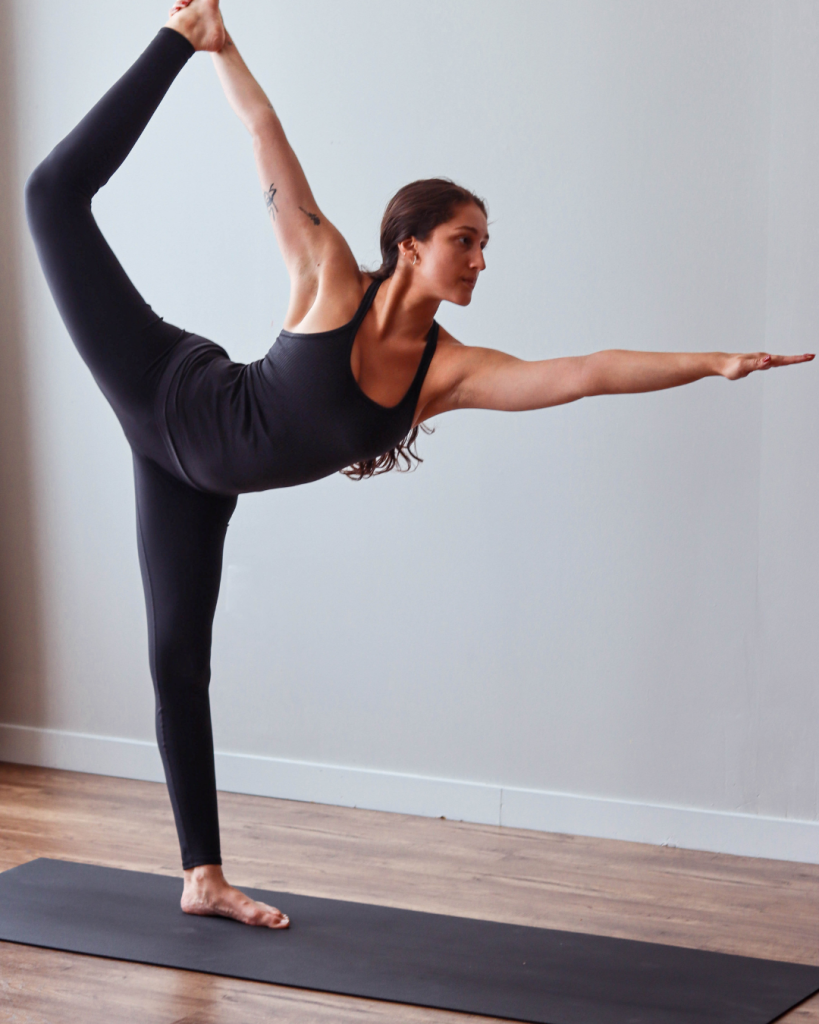
- Natarajasana – Dancers Pose
- Dandayamana Dhanurasana – Standing Bow Pose
- Uttita Hasta Padangusthasana A, B, C, D – Hand to Big Toe Pose
- Dandayamana – Standing Head to Knee Pose Janushirshasana
- Ardha Chandrasana (Iyengar) – Halfmoon Pose
- Virabhadrasana I, II, III – Warrior
- Utkatasana (Ashtanga)- zigzag pose
- Utkatasana (Bishnu Gosh)- Chair I, II, III
- Trikonasana – Triangle
- Uttita Parshvakonasana – Side Angle